
Can Shutters Fit Shaped Windows?
A striking arched window or gable-end feature can make a room, but it often creates the same question for homeowners: can shutters fit shaped windows without looking awkward or blocking the light that made you love the window in the first place? The short answer is yes. The more useful answer is that they can, provided they are properly designed, carefully measured and made to the exact shape of the opening.
This is where shaped shutters differ from off-the-shelf options. Standard blinds and curtains can cover an unusual window, but they rarely follow its lines neatly. Bespoke shutters are made to work with the architecture rather than fight against it, which is why they are such a popular choice for feature windows in period homes, loft conversions and contemporary extensions alike.
Can shutters fit shaped windows in every case?
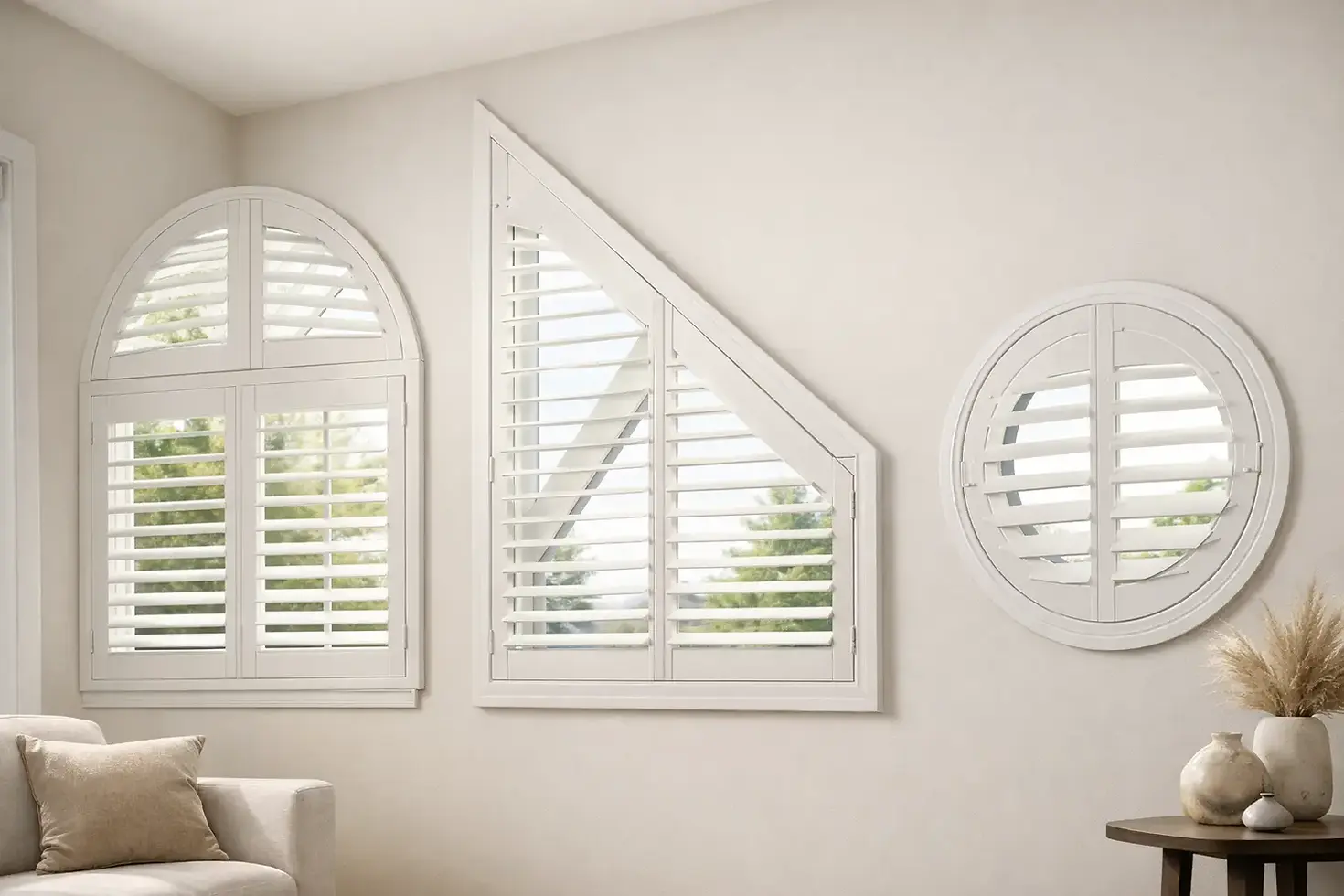
In most cases, yes, but the right design depends on the shape, size and position of the window. Arched windows, circular windows, triangular frames, angled tops and eyebrow shapes can all be fitted with shutters. What matters is whether the shutter needs to mirror the shape exactly, whether part of the opening should remain fixed, and how you want the panels to operate.
That last point is important. A shaped window is not always best served by a fully opening shutter. Sometimes a fixed shutter panel makes more sense, especially on decorative windows that are there to bring in light rather than to provide a view or ventilation. In other cases, combining shaped top sections with opening lower panels gives you a more practical result.
This is why a one-size-fits-all answer is rarely helpful. The window itself sets the rules.
Which shaped windows work best with shutters?
Some shapes are more straightforward than others. Arched windows are one of the most common and usually one of the most successful. A shutter can be made to follow the curve, creating a clean, balanced look that feels built in rather than added on later.
Circular and porthole-style windows also work well with bespoke shutters, particularly when privacy is needed but you still want the shape to remain a feature. Triangular and angled windows are often seen in loft rooms and modern extensions. These can usually be shuttered too, although panel layout and louvre direction need extra thought.
The easiest shaped windows for shutters tend to be those with clear, symmetrical lines. More complex designs, such as windows with multiple angles, very shallow curves or unusual internal mouldings, can still be possible, but they require greater precision in manufacturing and installation.
Why bespoke measuring matters
With standard rectangular windows, small discrepancies can sometimes be hidden. With shaped windows, they cannot. Even a minor measuring error is far more visible when a shutter is designed to follow an arch or angle exactly.
That is why professional measuring is such a key part of the process. The frame depth, the exact curve of the opening, any handles or obstructions, and the condition of the surrounding plasterwork all affect the final fit. Older properties often add another layer of complexity because walls and window reveals are not always perfectly square or symmetrical, even when they appear to be at first glance.
For homeowners investing in a finished look, this is not the place to guess. A precise survey helps avoid gaps, rubbing panels and awkward proportions. It also ensures the shutter sits comfortably within the room, both visually and practically.
Design choices that affect the result
When people picture shutters, they often think only in terms of style. With shaped windows, design is also about function. The main decision is whether the shutter should be fixed or operable.
A fixed shaped panel is often ideal for windows high up in a gable, over doors or in stairwells, where the main aim is to soften light and complete the look of the window. An operable panel is more useful where access, airflow or flexible privacy matters.
Louvre size also changes the appearance. Larger louvres can look cleaner and more contemporary, but on smaller shaped windows they may feel oversized. Smaller louvres can suit compact openings better, although they create a more detailed look. Frame choice matters too. A well-selected frame should complement the shape rather than overwhelm it.
In some installations, a split design works best. For example, an arched top section may be fixed in place while the rectangular section below opens as normal. This gives you everyday practicality where you need it, without compromising the window’s shape.
Are there any limitations?
There are a few, and an honest answer is better than a hard sell. Very shallow reveal depths can limit how the shutter is framed. Windows that open inwards may need special consideration so that the shutter does not obstruct operation. Extremely intricate or irregular shapes can increase production time and cost.
There is also the question of light. Shutters give excellent control, but any fitted solution introduces more structure than a simple blind. On some feature windows, especially smaller ones, you may prefer a design that keeps as much glass visible as possible. That does not mean shutters are wrong for the space, only that the design should be chosen carefully.
Budget is another factor. Shaped shutters are more specialised than standard panels, so they are typically priced accordingly. For many customers, the value lies in the tailored fit, durability and finished appearance, particularly on windows that are hard to dress attractively in other ways.
Can shutters fit shaped windows better than blinds?
Often, yes, especially if appearance is a priority. Blinds can be a practical solution for some unusual windows, but they usually sit across the opening rather than following its exact outline. That can mean losing the visual impact of the shape.
Shutters are different because they are built around the geometry of the window. On an arched or circular opening, that can make a dramatic difference to the finished room. Instead of hiding the shape, shutters frame and emphasise it.
That said, blinds may still be the better choice in some spaces. If you need a softer budget, want full blackout in a bedroom, or have a particularly awkward opening where a lighter-touch treatment makes more sense, a bespoke blind might be worth considering. The right answer depends on what matters most to you - style, privacy, light control, access or cost.
Where shaped shutters make the biggest impact
Feature windows are often left undecorated because owners worry about spoiling them. In practice, the right shutter usually does the opposite. It gives the window purpose and polish, making it feel like part of the interior scheme rather than an awkward architectural extra.
This is especially true in bay-fronted period homes, top-floor conversions and rear extensions where unusual glazing has been added to bring in more light. In these settings, shaped shutters can provide privacy without resorting to heavy curtains, and they can improve the overall finish of the room in a way that feels permanent.
For properties in areas such as Muswell Hill, Highgate and Crouch End, where architectural character is often part of the appeal, that tailored finish matters. A shaped shutter should look as though it belongs to the window, not as though it has been forced onto it.
What to expect from a proper shutter survey
A good consultation should go beyond simply confirming that shutters will fit. It should cover how they will fit, how they will open, what they will look like from inside and out, and whether another option might actually serve the room better.
This is where experience makes a difference. An expert surveyor will assess reveal depth, window access, light levels and everyday use, then recommend a design that suits both the property and the people living in it. In some cases, the best advice may be a fixed shaped panel. In others, it may be a mixed layout or a different treatment altogether.
That practical guidance is often what turns a shaped window from a problem into one of the strongest features in the room.
So, can shutters fit shaped windows? Absolutely - when they are bespoke, well planned and professionally installed. The real question is not whether it can be done, but how to do it in a way that respects the shape, suits the room and gives you a result worth investing in. If you have an unusual window and want a neat, made-to-measure finish, start with expert advice and accurate measuring. The right solution should feel straightforward from the outset.



Comments