
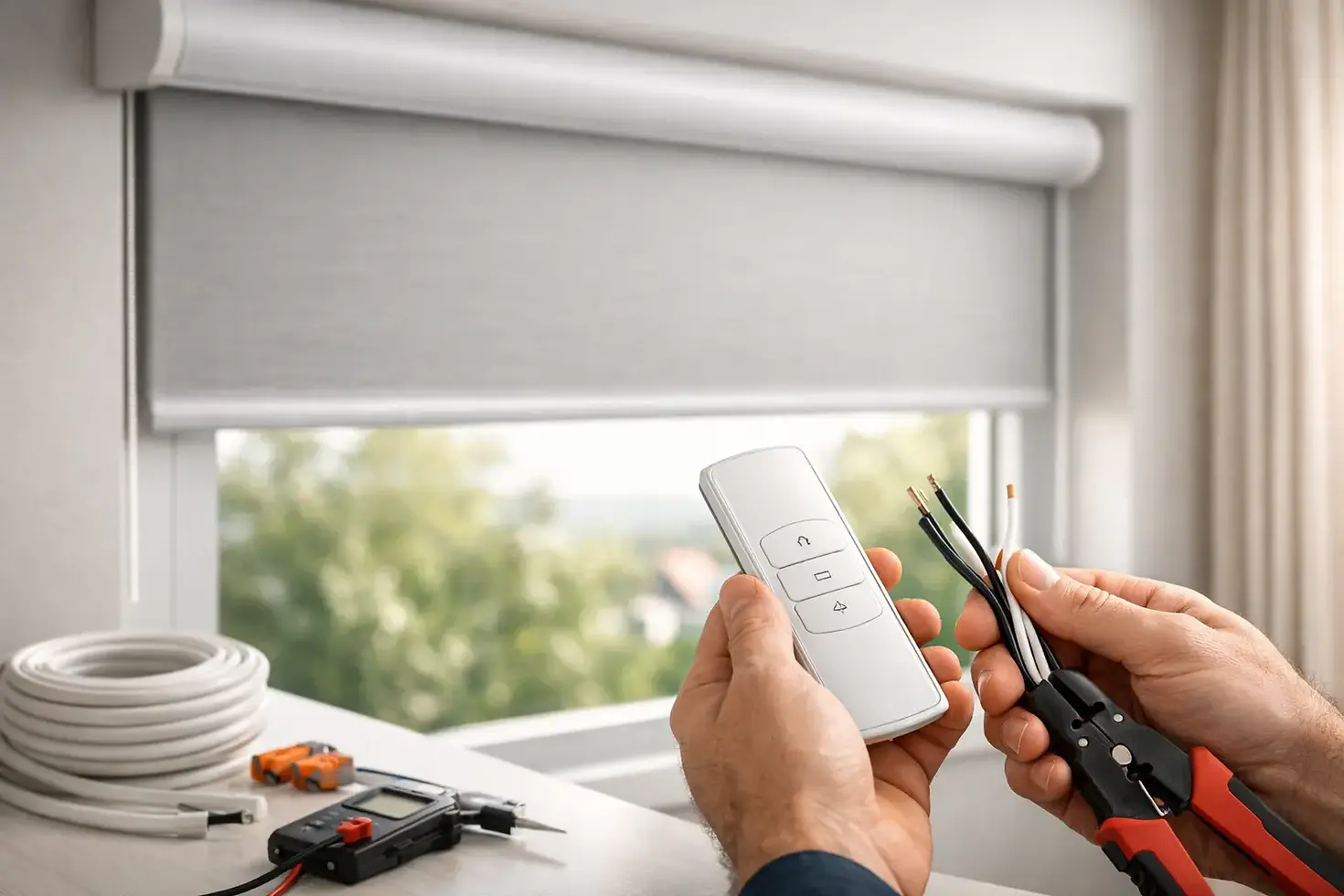
Do Motorised Blinds Need Wiring?
If you are planning new blinds and wondering do motorised blinds need wiring, the short answer is no - not always. Many modern systems are battery-powered and designed to work without chasing cables into walls or redecorating afterwards. That said, some installations do benefit from wiring, particularly on larger projects or where a cleaner, more permanent setup is the goal.
This is one of those decisions that looks simple at first and then quickly depends on the details. Window size, access to power, the number of blinds, the type of property and how polished you want the finished look to be all make a difference. The right answer is usually the one that fits your room, your budget and how you actually live or work in the space.
Do motorised blinds need wiring for every installation?
No. Motorised blinds are available in three broad power setups: battery-powered, plug-in and hardwired. Each one has its place, and none is automatically the best choice for every home or commercial setting.
Battery-powered motorised blinds are the most popular option for many households because installation is straightforward. There is no need to run cables through plaster, lift floorboards or involve an electrician in every case. For homeowners upgrading a bedroom, living room or kitchen, this can be the most practical route.
Plug-in systems sit somewhere in the middle. They do need access to a nearby socket, so there is still a power requirement, but not full hardwiring. This can work well if the blind is close to an existing outlet and you are comfortable with that arrangement.
Hardwired motorised blinds connect directly into the electrical system. These are often chosen for larger renovations, new builds or commercial properties where wiring can be planned in from the start. They can offer a very tidy result, but the installation process is more involved.
The case for battery-powered motorised blinds
For many customers, battery power is the reason motorised blinds feel accessible rather than complicated. You get the convenience of remote control or app operation without turning the job into a building project.
This setup is especially useful in finished rooms where no one wants the disruption of opening walls or repairing decoration. It also suits awkward windows, bay windows and spaces where routing power neatly would be difficult. In period properties, where preserving the character of the room matters, battery-powered blinds can be a smart solution.
The obvious trade-off is maintenance. Batteries do need charging or replacing over time, although not as often as some people expect. Usage, blind size and motor type all affect battery life. A blind opened and closed every day will naturally need attention sooner than one used only occasionally.
For most households, that maintenance is minor compared with the convenience of a simpler install. If you are choosing one or two motorised blinds for comfort and privacy, battery operation is often the most sensible place to start.
When hardwiring makes more sense
There are situations where wiring is the better long-term decision. If you are fitting several motorised blinds across one property, or if the blinds will be used heavily every day, hardwiring can be more convenient over time.
This is often the preferred choice in home renovation projects where electrics are already being updated. If the walls are open and access is available, wiring blinds in at that stage can create a cleaner finish and remove the need to think about battery charging later.
Commercial spaces can also benefit from hardwired systems. In an office, showroom or meeting room, reliability and consistency matter. Staff may not want to monitor battery levels or deal with interruptions, so a wired installation can be the more practical option.
Larger blinds may also lean towards hardwired motors, particularly where fabric weight is greater or daily use is frequent. It is not that battery-powered models cannot handle substantial blinds, but the demands of the installation should be assessed properly rather than assumed.
What affects whether wiring is needed?
The biggest factor is the type of motorised blind system you choose, but the window itself matters too. A small bedroom roller blind has very different requirements from a wide blind across bi-fold doors.
Access is another key issue. If there is no nearby socket and you do not want visible cabling, battery power may be the neatest option. If you are renovating and have the chance to conceal wiring properly, hardwiring becomes more attractive.
The style of the room also plays a part. In some interiors, a visible plug or cable is not a problem. In others, especially carefully finished living spaces, people want as little visual interruption as possible. That is where professional measuring and planning really pays off.
Control preferences can influence the choice as well. Whether you want a handheld remote, wall switch, app control or smart home integration, some systems are easier to configure in certain power formats. The good news is that there is usually more than one workable solution.
Are wired blinds better than battery blinds?
Not necessarily. They are better for some projects and unnecessary for others.
Wired blinds tend to suit customers who want a permanent, low-maintenance setup and are happy to invest more in installation. Battery blinds tend to suit those who want convenience, cleaner fitting in existing rooms and less disruption. Neither option is a compromise if it is chosen for the right reasons.
What matters most is being realistic about the setting. If you are fitting one blind in a completed room, hardwiring may be excessive. If you are specifying blinds for an extension or a full-house refurbishment, it makes sense to at least consider wired options before the walls are finished.
This is where bespoke advice matters more than generic product claims. A supplier that measures properly and understands installation can save you from choosing a setup that looks good on paper but is awkward in practice.
Do motorised blinds need wiring in older properties?
Older homes often raise this question because owners are understandably cautious about disruption. The reassuring part is that motorised blinds can usually be installed very successfully without major electrical work.
Battery-powered systems are often the best fit in Victorian and Edwardian homes, converted flats and other properties where running concealed cables would be difficult or undesirable. You still get the ease of motorisation and a tidy result, without disturbing original features more than necessary.
That said, every property is different. Deep recesses, unusual window shapes and solid walls can all affect what is practical. In some cases, a wired solution can still work well, especially if other improvement works are already under way.
For homeowners in North London, where a mix of period houses and modern refurbishments is common, there is rarely a one-size-fits-all answer. The best installations are planned around the property rather than forcing the property to fit the product.
What to expect during installation
If you choose battery-powered blinds, installation is usually quick and relatively tidy. The blind is measured, fitted securely and paired with its control system. Once set up, operation is straightforward and the finish remains clean because there are no trailing cables to manage.
Plug-in systems add the need to consider cable routing and socket location. That may still be perfectly acceptable, but it should be planned so the final look feels intentional rather than improvised.
With hardwired blinds, more preparation is involved. Wiring routes need to be agreed in advance, usually before plastering or decorating is complete. Coordination matters here, especially if electricians, builders and blind installers are all involved. Done well, the result can look excellent. Done late, it can become more disruptive and more expensive than expected.
That is why a consultation is so useful. A proper site visit can identify the practical option early, before you buy a system that is not ideal for the room.
The best choice is usually the one that suits the room
The real question is less do motorised blinds need wiring and more which power option suits your windows best. If you want a straightforward upgrade with minimal disruption, battery-powered blinds are often the answer. If you are renovating, fitting multiple blinds or want a fully integrated setup, wiring may be well worth considering.
At Alphabet Shutters, we find that customers value clarity as much as the product itself. They want blinds that look right, work properly and do not create unnecessary hassle during installation. That is exactly how this decision should be approached.
A well-chosen motorised blind should make daily life easier, not more complicated. Start with the room, the usage and the finish you want, and the right power option usually becomes clear.



Comments